Small Business Branding: A Practical Starter Guide for Entrepreneurs
Building a small business brand starts with defining who you serve, what makes you different, and communicating that identity consistently across every
 Photo via Unsplash
Building a brand for a small business means defining who you serve, why you are the right choice, and expressing that identity consistently in every place a customer encounters you. The logo comes later. Before any visual design decision, you need a clear brand foundation: a defined audience, a specific value proposition, and a documented voice. Everything else, including colors, taglines, and social posts, flows from that foundation.
Key Takeaways
- A brand is not a logo. It is the sum of your mission, values, voice, visual identity, and the experience customers have at every touchpoint.
- Brand-building starts with strategy: define your audience and unique value proposition before opening a design tool.
- Consistent branding across your website, social media, email, and local listings is directly linked to stronger customer confidence and easier buying decisions.
- Documenting your brand in written guidelines early prevents costly inconsistencies as you hire, outsource, or scale.
- For founders of early-stage businesses, your personal brand and credibility are part of your company's brand equity, especially before the business has its own reputation.
 Photo via Pexels
What Is the Difference Between a Brand and a Logo?
A logo is a visual mark. A brand is the total impression your business creates in a customer's mind before, during, and after a purchase. It includes your company's mission and values, the way your team communicates, the experience of navigating your website, how you handle a complaint, and whether your social posts feel consistent from week to week.
Branding experts Carla Nikitaidis and Kathryn Humphries, writing for the U.S. Chamber of Commerce, put it plainly: consumers today want to know who you are and what you stand for, not just what you are selling. A well-designed logo on a business with no clear identity will not build trust. A business with a clear identity and a simple logo will.
This distinction matters practically. Many new business owners spend their first marketing dollars on logo design before they have answered the foundational questions: Who exactly is my customer? Why should they choose me over a competitor? What words describe how I communicate? Skipping those questions means the logo and all downstream design decisions are built on guesswork.
What Are the First Steps to Building a Brand From Scratch?
LivePlan's branding framework offers a sequential process that experienced brand strategists broadly endorse: understand your audience and competitors first, then define your brand focus and personality, then choose a name and slogan, then build visual identity, then document guidelines, and finally apply and measure. Treating brand-building as a trackable business discipline rather than a one-time creative project is what separates businesses that build lasting recognition from those that rebrand every two years.
Here is how to work through the foundational steps:
- Define your target audience precisely. Go beyond demographics. Identify the specific problem your customer is trying to solve, the language they use to describe it, and the alternatives they have considered. A neighborhood accountant serving freelancers and a national accounting software firm are both targeting "small business owners," but their brands should feel nothing alike.
- Write your unique value proposition. In one or two sentences, explain what you do, who you do it for, and why you are a better fit than the alternatives. Avoid generic phrases like "quality service" or "we care about our customers." Be specific about the outcome you deliver.
- Identify three adjectives that describe your brand voice. Branding experts commonly recommend this as a practical anchor for all future messaging. If your three words are "straightforward, warm, and local," every piece of copy, every social caption, and every email should be checked against those words before publishing.
- Research your competitors. Look at how similar businesses present themselves online. Identify gaps in how they communicate so your brand occupies a distinct position rather than blending in.
- Document your brand foundation before hiring designers or agencies. A one-page brand brief covering your audience, value proposition, voice adjectives, and mission statement gives any external partner a clear brief to work from and reduces revision cycles significantly.
How Do I Build a Visual Identity on a Small Business Budget?
Visual identity covers your logo, color palette, typography, and the style of photography or illustration you use. According to a GaggleAmp branding statistics report from January 2024, 71% of businesses with annual revenue under $500,000 operate with a monthly branding budget of only $100 to $500. That is a real constraint, and it shapes what is realistic.
A few practical observations on budget allocation:
- According to the same GaggleAmp report, 57% of small businesses will pay $500 for a company logo, while only 14% will pay more than $1,000. Professional logo design at the $500 level is achievable through freelance platforms, though quality varies significantly.
- According to a Renderforest Branding Survey from 2022, 84% of small businesses use online tools as their primary design solution. Tools like Canva or Adobe Express can produce consistent, professional-looking assets for social media and email without a design degree, but they work best when your brand colors, fonts, and logo are already locked down.
- Consistency matters more than polish, especially early on. A simple logo applied consistently across your website, Google Business Profile, social profiles, and email signature builds more recognition than an elaborate logo used differently in every context.
| Approach | Typical Cost Range | Best For | Key Trade-off |
|---|---|---|---|
| DIY design tools (Canva, Adobe Express) | Free to $20/month | Pre-revenue startups, solopreneurs | Requires time; limited uniqueness |
| Freelance designer (logo only) | $300 to $800 | Early-stage businesses needing a professional mark | No ongoing support; brand strategy not included |
| Branding package (strategy + visuals) | $1,500 to $5,000+ | Businesses ready to invest in a full identity | Higher upfront cost; best value long-term |
| Done-for-you marketing agency | $400 to $1,500+/month depending on scope | Businesses that want ongoing brand consistency without in-house staff | Monthly commitment; requires clear communication of goals |
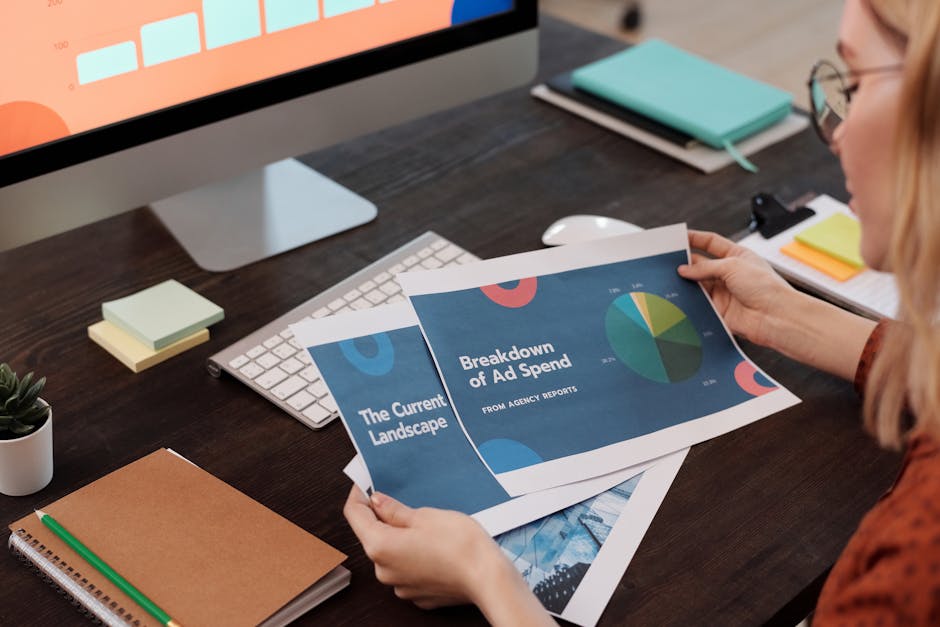 Photo via Pexels
How Do I Maintain Brand Consistency Across My Website, Social Media, and Local Listings?
Consistency is the mechanism through which a brand becomes recognizable. When a customer sees your Instagram post, visits your website, and finds your Google Business Profile, all three should feel like they belong to the same business. That means the same logo, the same color palette, the same tone of voice, and the same business name formatted exactly the same way.
According to LinkedIn data reported by Yaguara in 2026, the top three channels small and medium-sized businesses use to expand brand awareness are company websites (69%), online professional networks (61%), and social media (47%). Notably, all three require consistent visual and verbal identity to work together rather than creating a fragmented impression.
The practical tool that holds consistency together is a brand style guide. It does not need to be elaborate. A two to three page document covering your logo usage rules, hex color codes, approved fonts, voice adjectives, and a few do-and-don't examples is enough to align a freelancer, a social media manager, or a marketing agency to your standards.
Email is another often-overlooked brand touchpoint. According to Campaign Monitor data cited by Crowdspring in 2024, 64% of small businesses use email marketing as part of their brand communications mix. An email template that matches your website and social look reinforces recognition at a channel many customers check daily.
Does the Founder's Personal Brand Matter for a Small Business?
Yes, especially in the early stages. Career coach Michelle Enjoli, writing for the U.S. Chamber of Commerce, notes that a small business owner's personal brand conveys their value and reputation, and it is particularly important to develop it before the business has built its own equity. In practical terms, this means your LinkedIn profile, the bio on your website, how you show up in local community groups, and the way you respond publicly to reviews are all part of your brand, not separate from it.
For service businesses in particular, where trust is the primary purchase driver, the founder's credibility often is the brand in the early months. Entrepreneurs who treat their personal presence as a separate concern from their business brand are leaving a significant trust signal unmanaged.
How Long Does It Take to Build a Recognizable Brand?
There is no reliable universal timeline, and any source claiming a specific number of months should be read with skepticism. What the research does support is that consistency over time is the primary driver of brand recognition, not any single campaign or launch moment.
A few realistic expectations based on widely accepted marketing principles:
- A clear visual identity and documented brand voice can be established in two to six weeks with focused effort or agency support.
- Recognition within a local market typically builds over six to twelve months of consistent presence across search, social, and in-person channels.
- Brand equity, meaning the degree to which customers choose you because of who you are rather than just price or proximity, tends to develop over years, not quarters.
- The businesses that build recognition fastest are not those that spend the most. They are those that show up consistently in the right channels for their specific audience.
Entrepreneur.com makes an important internal point worth naming here: brand-building is a culture exercise as much as a marketing one. Every employee who interacts with a customer is expressing your brand. If your team cannot articulate what makes your business different, customers will not be able to either.
 Photo via Pexels
Frequently Asked Questions
What is the difference between a brand and a logo for a small business?
A logo is one visual element of a brand. A brand is the complete identity your business projects, including your mission, values, the tone of your communications, the experience customers have when they interact with you, and the way your business is perceived in the market. A logo can be redesigned in a day. Building a brand takes consistent effort across every customer touchpoint over time. Many small businesses over-invest in logo design early and under-invest in the strategy that gives the logo meaning.
How much should a small business budget for branding?
According to a GaggleAmp branding statistics report from January 2024, 71% of businesses with annual revenue under $500,000 spend between $100 and $500 per month on branding. That budget can cover a professionally designed logo, a basic brand style guide, and consistent social media templates. If your budget is very limited, prioritize documenting your brand foundation (audience, value proposition, voice) before spending anything on design. Consistent execution of a simple brand identity outperforms inconsistent execution of an elaborate one.
How do I define my target audience for branding purposes?
Start by describing the specific problem your best current customers are trying to solve, not just their age or location. Think about what they searched for before finding you, what alternatives they considered, and what finally made them choose you. If you are pre-revenue, describe the customer you are best positioned to serve based on your expertise and the gap you identified in the market. The more precisely you can describe this person's situation, the more specifically your brand can speak to them. Broad audience definitions produce bland brands that resonate with no one in particular.
How do I maintain brand consistency across social media, my website, and in-person?
The practical answer is a written brand style guide that covers your logo usage, color codes, approved fonts, voice adjectives, and at least a few examples of on-brand versus off-brand communication. Give this document to every person who creates content or communicates on behalf of your business, including freelancers, social media managers, and any agency partners. For in-person consistency, make sure your printed materials, signage, and staff communication reflect the same tone your digital presence projects. Auditing all your channels against the style guide every quarter catches drift before it becomes a credibility problem.
Should a startup work with a marketing agency to build its brand, or do it in-house?
Both approaches can work, and the right choice depends on your team's skills, available time, and how quickly you need to establish market presence. Building in-house gives you direct control and is often more cost-effective if you or a team member has design and strategy experience. Working with a done-for-you digital marketing agency, such as Social5, accelerates the process and reduces the risk of inconsistencies across your website, social channels, listings, and content. The main trade-off with agency support is that you need to invest time upfront communicating your brand foundation clearly so the agency's output genuinely reflects your identity rather than a generic template. A hybrid approach, where you define brand strategy in-house and outsource execution, is a common and practical middle ground for early-stage businesses.
What is a unique value proposition and why does it matter for branding?
A unique value proposition (UVP) is a clear, specific statement that explains what your business does, who it does it for, and why it is a better fit than the alternatives available to that customer. It is the strategic core of your brand. Without a UVP, your brand messaging defaults to generic claims that every competitor also makes, such as "great service" or "competitive prices." A strong UVP gives your visual identity, voice, and marketing channels a specific job to do: communicate one compelling reason to choose you. It also helps you make faster decisions about which marketing channels, partnerships, and content topics align with your positioning and which ones do not.
Own your reputation
We help brands earn trust at every touchpoint, online and off.
See our reputation services