A Response Framework for Handling Negative Reviews
Respond calmly within 24 hours, acknowledge the issue, apologize where warranted, offer a fix, and move details offline.
 Photo via Unsplash
The right way to respond to a negative review is calmly, quickly, and specifically: acknowledge the customer's experience, avoid being defensive, offer a concrete next step, and take the detailed back-and-forth offline. The goal of a public reply is not to win an argument with one reviewer, it is to show every future customer reading that page that your business takes problems seriously and fixes them.
This matters more than most small business owners realize. Reviews are no longer a side detail people glance at, they are a primary decision-making tool. As of 2026, 97% of consumers still lean on reviews to guide their purchase decisions [1], and 41% now say they "always" read reviews when researching a business, up sharply from 29% in 2025 [2]. Negative reviews carry real weight too: 77% of consumers say negative reviews make them less likely to use a business, compared with 85% who say positive reviews make them more likely to use one, based on BrightLocal's 2026 survey of 1,002 US adults [3]. In other words, the review itself is only half the story. How you respond to it is the other half, and it's the half you actually control.
 Photo via Pexels
A calm, specific reply does more for your reputation than the star rating alone.
Why Does Responding to Negative Reviews Matter So Much?
A negative review left unanswered doesn't just sit there quietly, it actively shapes how the next reader judges your business. Research from BrightLocal found that 42% of consumers are unlikely to use a business that never responds to reviews at all [4], which means silence carries its own reputational cost separate from the original complaint. A thoughtful reply also signals to search engines and directory platforms that a business is active and engaged with its listings, though it's worth being precise here: review responses are widely treated by consumers and platforms as a mark of an accountable, active business, but no credible source has confirmed a direct, measurable ranking boost from the act of replying itself. Treat responsiveness as a trust signal and a customer-service function first, and any indirect visibility benefit as a secondary bonus.
How Quickly Should a Business Respond to a Negative Review?
Faster than most business owners assume. Consumer expectations around response speed have shifted noticeably: 19% of consumers now expect a same-day response to their review, up from 6% the year before, and 32% expect a reply by the next day, up from 18% [5]. Added together, more than half of reviewers expect to hear back within 24 hours. A slow reply doesn't just delay resolution, it can function as a second negative signal layered on top of the original complaint, since the reviewer and anyone reading later can see exactly how many days passed before the business engaged.
What Is a Reliable Framework for Responding to a Negative Review?
Most negative-review responses fail for one of two reasons: they sound like a defensive form letter, or they try to solve the whole problem in public. The framework below avoids both traps by keeping the public reply short and specific, then moving detailed resolution to a private channel.
Read it twice before reacting. The first read triggers emotion, the second lets you identify the actual complaint (wait time, staff interaction, product defect, billing issue) so your reply addresses the real issue rather than a generic apology.
Acknowledge the specific experience. Repeat back a concrete detail from the review ("you mentioned a 30-minute wait for your table") so the reviewer and future readers can see you actually read it, not copy-pasted a template. BrightLocal's guidance specifically warns that templated responses can hurt trust rather than rebuild it [4].
Apologize for the experience, not necessarily the fault. "I'm sorry your visit didn't go the way it should have" is honest even in disputed situations, and it de-escalates without conceding a claim you may need to dispute privately.
Briefly explain, only if useful. A one-sentence explanation (a staffing shortage, a shipping delay) can add context, but avoid long justifications that read as excuse-making.
Offer a concrete next step. Invite the reviewer to call, email, or message you directly, and name a specific person or contact method rather than a vague "please reach out."
Close professionally, every time. Thank them for the feedback even when the review feels unfair. Future customers read the tone of your reply far more than they read the reviewer's grievance.
Should You Respond Publicly or Take the Conversation Offline?
Both, in sequence. Post a brief, calm public reply so anyone reading the review sees that you acknowledged it, then invite the detailed resolution into a private channel (phone, email, or direct message). Never negotiate refunds, discuss account specifics, or share personal details in the public reply. This protects customer privacy, keeps the public thread short and professional, and prevents an ongoing public argument that other readers can watch unfold in real time.
Example: A Restaurant Handling a Service Complaint
Example scenario: A diner leaves a two-star review saying their entree arrived cold and the server never checked back. A reasonable response might read: "Thank you for letting us know, and I'm sorry your entree wasn't served at the right temperature; that's not the standard we hold ourselves to. I'd like to make this right, could you email us at the address on our profile with the date of your visit? We'll follow up directly." This response acknowledges the specific complaint, avoids excuses, and moves the resolution offline.
Example: A Service Business Facing an Unfair or Exaggerated Review
Example scenario: A home services company receives a one-star review claiming a technician was "hours late" when scheduling records show a 20-minute delay. Rather than arguing in the reply, a calm response works better: "We're sorry your appointment didn't start on time, and we understand that's frustrating when you've taken time out of your day. We'd welcome the chance to discuss the scheduling details directly, please call our office so we can look into what happened." This avoids publicly disputing the reviewer's account while still inviting a factual conversation privately.
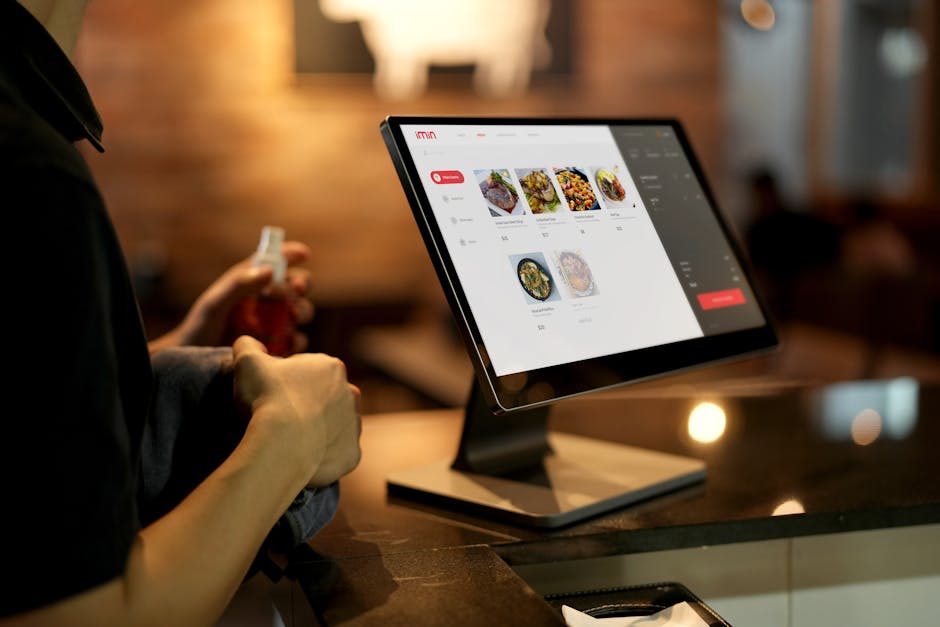 Photo via Pexels
Reading the complaint twice helps you respond to the actual issue, not just the tone.
Does Responding to a Negative Review Draw More Attention to It?
Not in a way that outweighs the benefit of replying. Reviews are already visible to anyone browsing your listing, whether you respond or not, and 41% of consumers now always read reviews when researching a business [2]. A calm, professional reply doesn't amplify the complaint, it reframes it: future readers see a business that noticed a problem and addressed it, which research suggests is viewed more favorably than a business that stayed silent [4]. The risk isn't visibility, it's an emotional or defensive reply that gives the complaint more weight than the original review did.
Should a Business Ask a Customer to Delete or Revise a Negative Review?
Generally, no, and it can backfire. Directly asking a reviewer to remove or edit a review, especially in exchange for a refund or discount, can come across as pressure rather than genuine resolution, and some review platforms restrict or prohibit incentivized review changes in their terms of service. The better path is to resolve the underlying issue privately and let the customer decide, on their own, whether to update the review. Many will revise a rating voluntarily once a business has clearly made things right, but that has to be their choice, not a condition you set.
Approach | Typical Cost Range | Best For | Key Benefit |
|---|---|---|---|
Manual review monitoring and replies (owner or staff) | No direct cost, but requires ongoing time | Very small businesses with low review volume | Full control, no learning curve |
Review management software or automation tools | Roughly $100 to $300/mo | Businesses getting steady review volume across multiple platforms | Faster alerts, easier tracking across sites |
Done-for-you reputation management service | Roughly $150 to $450/mo depending on scope | Owners with limited time or multi-location businesses | Consistent, professional responses without owner bandwidth |
How Does Responding to Negative Reviews Affect Local SEO and Google Rankings?
Google has not published a documented ranking factor that directly rewards businesses for replying to reviews on Google Business Profile. What is well established is the consumer behavior side: response habits shape whether people trust and choose a listing, and platforms like Google Business Profile do allow business owners to reply publicly to any review, which keeps the conversation associated with your listing rather than buried. Treat review responses primarily as a reputation and conversion factor, not a guaranteed ranking lever, and be skeptical of any claim promising a specific search-position improvement from replying to reviews.
This is one area where a done-for-you approach can help. Social5's reputation management services combine review monitoring, prompt response support, and Google Business Profile optimization so replies go out quickly and consistently, without an owner having to check five platforms every morning.
What Should You Say to a Review That Seems Fake or Malicious?
Respond calmly and factually, without accusing the reviewer publicly. A short, professional reply such as "We have no record of this visit under the details provided, please contact us directly so we can look into it" protects your credibility without escalating a public dispute. If you have strong reason to believe a review violates a platform's policies (it references a competitor, contains no connection to an actual transaction, or includes clearly false claims), most platforms including Google offer a formal flagging or reporting process. That process can take time and does not guarantee removal, so a calm public reply is still worth posting while any report is under review.
 Photo via Unsplash
Moving detailed resolution to a phone call or email keeps the public reply short and professional.
Frequently Asked Questions
How quickly should a business respond to a negative review?
Aim for within 24 hours whenever possible. Consumer expectations have shifted toward faster replies, with 19% now expecting a same-day response and 32% expecting one by the next day [5], meaning more than half of reviewers expect to hear back within a day of posting.
Should every negative review get a response, even minor ones?
Yes. BrightLocal's guidance is to respond to every review, not just the negative or high-visibility ones, since consistent responsiveness across all reviews functions as an ongoing trust signal rather than a one-time customer service task [4]. Skipping minor complaints can still read as inconsistency to someone scrolling through your full review history.
What if the negative review contains false information?
Correct the record calmly and briefly in your public reply without arguing point by point, then invite the reviewer to contact you directly to discuss specifics. If the review appears to violate a platform's content policies, use that platform's official reporting process, but don't rely on removal as your only response, since it isn't guaranteed and can take time.
Can responding to negative reviews actually improve how customers see the business overall?
It can support trust, though not by erasing the original complaint. Since 41% of consumers now always read reviews when researching a business [2], a calm and specific response gives every one of those readers evidence that the business listens and resolves issues, which is a different signal than the star rating alone conveys.
Should a small business owner write every reply personally, or can it be delegated?
It can be delegated, but personalization matters more than who writes it. Whether it's the owner, a manager, or a reputation management service handling replies, each response should reference the specific complaint rather than reuse a generic template, since templated responses are seen as impersonal and can undercut trust rather than rebuild it [4].
Sources
BrightLocal (2026), 2026: 97% of consumers still lean on reviews to guide their purchase decisions, as of the 2026 survey of 1,002 US adults
BrightLocal (2026), 2026: 41% of consumers now 'always' read reviews when browsing for a business in 2026, up from 29% in 2025
BrightLocal (2026), 2026: 85% of consumers are more likely to use a business after reading positive reviews, while 77% are put off by negative reviews (2026)
BrightLocal (2026), 2026: 42% of consumers are unlikely to use a business that never responds to reviews at all, according to BrightLocal's 2026 Local Consumer Review Survey
BrightLocal (via Valley Marketing Group analysis) (2026), 2026: 19% of consumers expect a response to their review the same day, up from 6% the year before, and 32% want a response by the following day, up from 18%, meaning over half expect a reply within 24 hours
Own your reputation
We help brands earn trust at every touchpoint, online and off.
See our reputation services