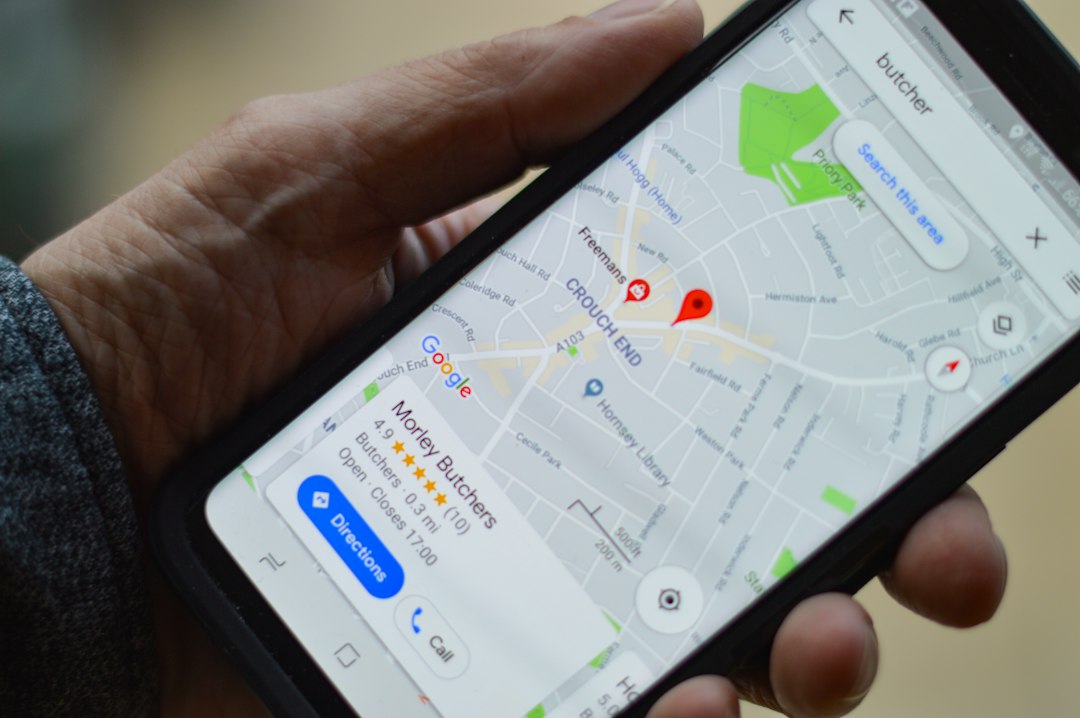
How Do Small Businesses Rank Higher on Google? A Plain-English Guide for SMBs
Small businesses rank higher on Google by optimizing their Google Business Profile, earning consistent reviews, building local citations, and publishing
 Photo via Pexels
Small businesses rank higher on Google by focusing on three core pillars: relevance, authority, and technical soundness. Relevance means your business information and content clearly match what searchers are looking for. Authority is built through reviews, backlinks, and consistent directory listings. Technical soundness ensures Google can find, trust, and display your business with confidence. Master these three areas and your rankings will follow.
Key Takeaways
- Google evaluates local businesses on relevance, distance, and prominence. All three must be addressed together for sustained rankings.
- A fully optimized Google Business Profile is the single highest-ROI starting point, driving approximately 32% of local ranking power.
- Businesses with 50 or more Google reviews earn 266% more leads than those with fewer than 10, making review generation a non-negotiable priority.
- 61% of small businesses are not currently investing in SEO, creating a wide-open competitive opportunity for those who act now.
- Done-for-you services like Social5's SEO bundle let time-strapped business owners capture this opportunity without adding more to their plate.
 Photo via Unsplash
What Does Google Actually Look at When Ranking a Small Business?
Google's local ranking algorithm is built on three official signals: relevance, distance, and prominence. Relevance measures how well your business profile and website content match the user's search query. Distance is the physical proximity of your location to the person searching. Prominence reflects how well-known and trusted your business is across the web, including the number and quality of your reviews, the authority of websites linking to you, and the consistency of your business information in online directories.
No single tactic locks in a top ranking. Instead, businesses that win in local search take a multi-signal approach: they keep their Google Business Profile complete and active, they earn reviews regularly, they maintain accurate listings across directories, and they publish content that genuinely answers what local customers are searching for. Each of these signals stacks on top of the others, building cumulative authority over time.
Why Is Google Business Profile So Important for Local Rankings?
Your Google Business Profile (formerly Google My Business) is the most visible piece of real estate you own in local search. It appears in the Google Map Pack, which sits above organic results and captures enormous visibility for searches with local intent. Experts estimate that profile completeness and activity drives approximately 32% of local ranking power, making it the single most impactful starting point for any small business.
A complete profile includes accurate business hours, a detailed business description, selected categories, uploaded photos, and regular posts. Businesses with complete, consistently updated profiles see up to a 70% increase in clicks and direction requests compared to incomplete profiles. That number alone justifies treating your Google Business Profile as a living marketing asset, not a one-time setup task.
How Do Online Reviews Affect Your Google Search Ranking?
Reviews are one of the most powerful and most overlooked ranking signals available to small businesses. Google treats reviews as social proof of your business's trustworthiness and relevance. The volume of your reviews, your average star rating, and your review velocity (how frequently new reviews arrive) all contribute to how prominently Google displays your listing.
The data is striking: businesses with 50 or more Google reviews earn 266% more leads than those with fewer than 10. Review velocity matters as much as total count. A business that consistently earns two or three new reviews per week signals to Google that it is active, trusted, and relevant to current customers. Automated review request systems, like those included in Social5's SEO and Reputation Management Bundle, make this process consistent without requiring manual follow-up from the business owner.
Responding to reviews also matters. Google favors businesses that engage with their customers, whether the feedback is positive or critical. A thoughtful, professional response to a negative review demonstrates legitimacy and customer care.
What Is NAP Consistency and Why Does It Suppress Rankings?
NAP stands for Name, Address, and Phone Number. Google cross-references your business information across dozens of online directories, social platforms, and data aggregators. When your NAP information is inconsistent across these sources, even minor discrepancies like an abbreviated street name on one listing versus a spelled-out version on another, it creates confusion that reduces Google's trust in your business and directly suppresses your local rankings.
Citation signals account for approximately 15% of local ranking factors. Cleaning up and maintaining consistent citations across directories like Yelp, Apple Maps, Bing Places, and dozens of industry-specific directories is tedious work, but it is foundational. Social5's Directory Listings service handles this at $230 per month, removing an invisible rankings drag that many small business owners don't even know exists.
What Kind of Content Helps Small Businesses Rank on Google?
Content remains one of the highest-leverage activities in any SEO strategy. Over 70% of Google searches now rely on AI-driven algorithms that reward genuine expertise, useful answers, and technical performance over outdated keyword-stuffing approaches. To rank in 2025, your content needs to actually serve the reader.
For small businesses, the most effective content is localized and detailed. Long-form, localized content of 2,000 words or more earns 77% more backlinks than short articles and ranks for three times more keywords. A neighborhood plumber writing a thorough guide to common pipe issues in their city's older housing stock is far more likely to rank, earn links, and convert readers than a business that posts thin, generic service descriptions.
Blog content, service pages, FAQ pages, and location pages all contribute to your site's topical authority in Google's eyes. Social5's SEO content service starts at $200 per month for monthly blog posts written specifically for search and GEO visibility, giving small businesses a consistent publishing schedule without hiring a full-time writer.
 Photo via Unsplash
What Is the Difference Between Local SEO and General Organic SEO?
Local SEO targets searches that include geographic intent, whether explicit ("dentist in Austin") or implicit ("dentist near me"). It is governed heavily by the Google Map Pack, your Google Business Profile, reviews, and citations. General organic SEO refers to ranking in the standard blue-link results for broader, non-location-specific queries. It is driven primarily by content quality, backlinks, and domain authority.
Most small businesses benefit most from prioritizing local SEO first. Consider the numbers: 46% of all Google searches have local intent, and 78% of local mobile searches result in an offline purchase within 24 hours. For a brick-and-mortar shop, a service-area business, or a professional practice, local SEO is where the immediate revenue opportunity lives.
That said, the two strategies are not mutually exclusive. A well-rounded approach builds a website with strong technical foundations, publishes authoritative content, earns quality backlinks, and optimizes for local signals simultaneously. This is exactly what an integrated done-for-you service is designed to deliver.
How Long Does It Take for SEO to Show Results for a Small Business?
Most businesses see initial improvements in local rankings within 60 to 90 days of implementing proper optimization. Competitive markets, particularly those with well-established local competitors, may require 6 to 12 months to achieve top positions for high-value keywords. This timeline is one of the most important realities for small business owners to understand before they start.
SEO is not a paid ad that turns on and off with your budget. It is a compounding investment. The businesses that win consistently are those that treat SEO as an ongoing practice rather than a one-time project. For business owners managing a team, serving clients, and running daily operations, maintaining that consistency on their own is rarely sustainable. Done-for-you execution is not a luxury; it is often the difference between an SEO strategy that produces results and one that quietly stalls.
Do I Need a Professional Agency to Rank Higher on Google, or Can I Do It Myself?
You can absolutely make meaningful SEO improvements on your own, especially in the early stages. Claiming and completing your Google Business Profile, asking customers for reviews, and publishing a few well-written blog posts are all within reach of any motivated business owner. The challenge is time, consistency, and keeping up with Google's evolving algorithm.
The reason 61% of small businesses are not investing in SEO is not lack of awareness. It is lack of bandwidth. And yet 71% of small businesses that do invest in SEO report being satisfied with their results. That gap between intention and execution is exactly where a done-for-you partner delivers the most value. Social5 is built specifically to close that gap, providing small and medium businesses with a full marketing team without the full-time cost.
What Does a Complete Local SEO Strategy Cost for a Small Business?
The cost of local SEO varies widely depending on whether you hire a full agency, a freelancer, or use a done-for-you service model. The table below compares the most common approaches available to small and medium businesses.
| Option | Cost Range | Best For | Key Benefit |
|---|---|---|---|
| DIY SEO | $0 to $100 per month (tools) | Solopreneurs with significant free time | Low cost, full control |
| Freelance SEO Consultant | $500 to $2,500 per month | Businesses needing targeted advice | Flexible and customizable |
| Social5 Google Business Profile Optimization | $150 per month | Businesses starting with local search | Highest-ROI single channel optimized |
| Social5 SEO and Reputation Management Bundle | $400 per month | SMBs wanting a complete local SEO foundation | GBP, reviews, and citations managed together |
| Social5 Directory Listings | $230 per month | Businesses with inconsistent NAP data | Citation consistency restored and maintained |
| Social5 SEO Blog Content | $200 per month | Businesses building topical authority | Consistent, search-optimized content published |
| Full-Service Digital Marketing Agency | $3,000 to $10,000 per month | Larger businesses with complex needs | Comprehensive, dedicated team |
Social5's bundled approach is designed to give small businesses the multi-signal SEO coverage that Google's algorithm rewards, at a price point that makes ongoing investment sustainable. For most SMBs, starting with the SEO and Reputation Management Bundle at $400 per month provides the core infrastructure, with content and additional services layered in as the strategy matures.
What Are the Most Important Technical Basics for Small Business SEO?
Technical SEO does not need to be overwhelming for small businesses, but a few fundamentals cannot be ignored. Your website must load quickly, especially on mobile devices, since the majority of local searches happen on phones. Your site must be secure (HTTPS), easy for Google to crawl, and structured so that your most important service and location pages are easy to find.
Every page should have a unique title tag and meta description that include your primary keyword and location. Your site should include a clear contact page with your NAP matching your Google Business Profile exactly. Schema markup, specifically LocalBusiness schema, signals to Google the type of business you are, your location, your hours, and more. Social5's website packages, starting at $999 setup plus $59 per month for the Standard plan, are built with these technical foundations in place from day one.
Backlink quality also falls into the technical authority category. A single quality link from a local news outlet, your chamber of commerce, or a respected industry publication can carry more weight than dozens of low-quality links. Participating in community events, earning press mentions, and getting listed in industry associations are all practical backlink strategies for small businesses that do not require a large budget.
 Photo via Pexels
Frequently Asked Questions
How do I get my small business to show up on the first page of Google?
Showing up on the first page of Google requires a consistent, multi-signal approach. Start by fully completing your Google Business Profile with accurate information, photos, and regular updates. Build a collection of genuine customer reviews and respond to each one. Ensure your business name, address, and phone number are consistent across all online directories. Publish localized content on your website that answers the questions your customers are actually searching for. First-page results capture 91.5% of all search traffic, so the investment is well worth the effort. Most businesses begin seeing movement within 60 to 90 days of consistent optimization.
What is Google Business Profile and why is it important for local rankings?
Google Business Profile is a free tool from Google that lets you control how your business appears in Google Search and Google Maps. It is the most visible and impactful asset in local SEO, driving approximately 32% of local ranking power according to industry research. A complete and active profile signals trust to both Google and potential customers. It displays your hours, location, phone number, reviews, photos, and posts directly in search results, often before a user even visits your website. Treating your Google Business Profile as an active marketing channel rather than a static directory listing is one of the highest-leverage moves a small business can make.
How do online reviews affect my Google search ranking?
Reviews are a dominant ranking signal in local search. Google evaluates the quantity of your reviews, your average star rating, and how frequently new reviews arrive (review velocity). Businesses with 50 or more Google reviews earn 266% more leads than those with fewer than 10. Beyond rankings, reviews influence conversion directly. A searcher choosing between two plumbers with similar proximity will almost always choose the one with more and better reviews. Automating your review request process, so that every satisfied customer gets a prompt, is one of the simplest ways to compound this advantage over time.
What is the difference between local SEO and general organic SEO?
Local SEO focuses on ranking your business for searches with geographic intent, appearing in the Google Map Pack and local organic results for queries like "electrician near me" or "best coffee shop in Denver." It is driven by your Google Business Profile, reviews, and citations. General organic SEO focuses on ranking for broader, non-location-specific queries through website content, backlinks, and domain authority. For most small and medium businesses serving a geographic area, local SEO delivers the fastest and most direct return on investment. 78% of local mobile searches result in an offline purchase within 24 hours, which illustrates how high the conversion intent is for local queries.
How long does it take for SEO to show results for a small business?
Most businesses see initial improvements in local rankings within 60 to 90 days of implementing proper optimization strategies. Less competitive markets may see results sooner. Highly competitive markets, particularly in densely populated cities or industries with many established players, may require 6 to 12 months to achieve top positions for the most valuable keywords. The key is that SEO compounds over time. The businesses that maintain consistent effort, through regular content, ongoing review generation, and profile activity, continue to gain ground while competitors who stop stall or regress. This is why done-for-you execution is so valuable for business owners who cannot commit to this work personally every month.
Do I need to hire a professional digital marketing agency to rank higher on Google, or can I do it myself?
You can make meaningful SEO progress on your own, especially in the early stages. Completing your Google Business Profile, requesting reviews from customers, and publishing useful local content are all actionable steps any business owner can take. The challenge is sustained consistency. SEO is not a one-time task; it is an ongoing practice that requires regular attention across multiple channels simultaneously. For most small business owners managing daily operations, that consistency is hard to maintain. 71% of small businesses that invest in SEO report being satisfied with their results, and done-for-you services like those offered by Social5 are specifically designed to deliver that consistency without adding to the owner's workload. Think of it as having a full marketing team without the full-time cost.
Ready to win search?
Our SEO team builds rankings that drive real revenue, not just traffic.
See our SEO services