How to Get Your Business Into Google's Map Pack
Ranking in Google's map pack depends on your Google Business Profile, review signals, and local relevance to the searcher, not just your website.
 Photo via Pexels
The map pack (the block of three local business listings shown with a map above Google's organic search results) is ranked using three factors Google names explicitly: relevance, distance, and prominence. You influence those factors through your Google Business Profile, the consistency of your business information across the web, your review volume and content, and how directly your listed categories and services match what the searcher typed. There is no single fix and no guaranteed formula, but the levers are well documented and mostly within your control.
 Photo via Pexels
What Is the Map Pack and Why Does It Matter?
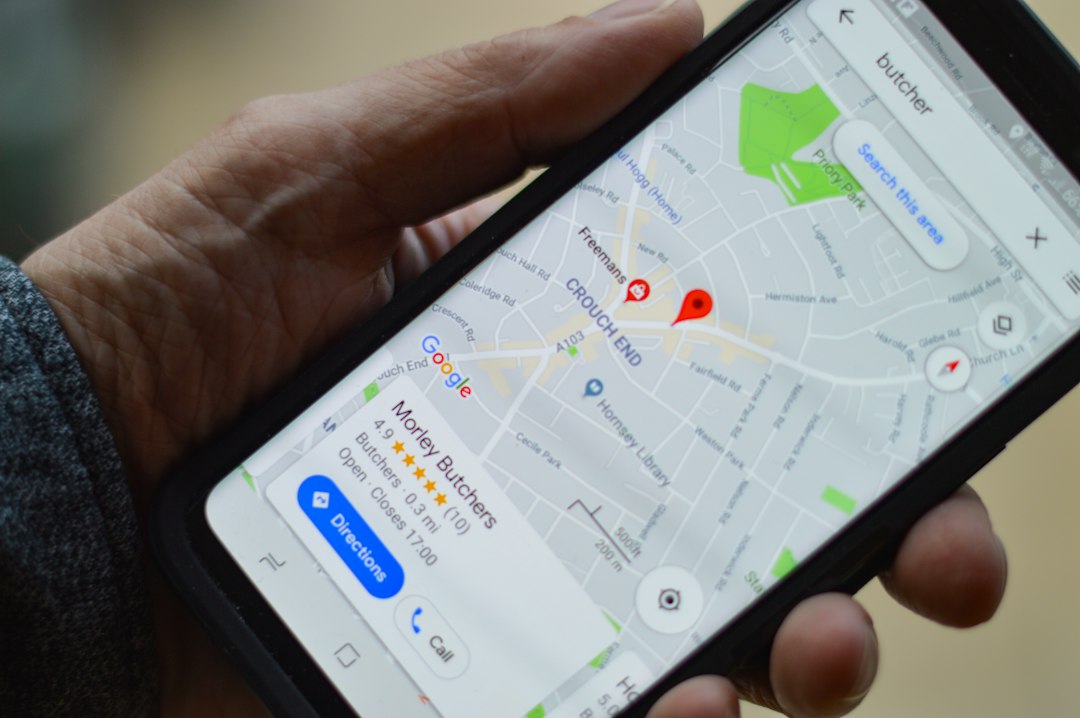
The map pack, sometimes called the local 3-pack, is the group of three business listings Google displays with a map when someone searches for a business type near a location, such as "plumber near me" or "coffee shop downtown Austin." It sits above the standard organic (blue link) results for most local searches. Because it shows a map, star rating, phone number, and hours right in the results, it captures attention and clicks before a searcher ever visits a website. For a local business, showing up here is often more valuable than ranking first for the same term in organic search, because the map pack is what most people see first on mobile.
What Actually Determines Map Pack Rankings?
Google's own local search guidance states that local results are ranked based on relevance, distance, and prominence [Google Business Profile Help documents these as the three ranking factors it uses for local results]. Here is what each one means in practice:
Relevance is how well your Google Business Profile matches what someone searched for. This depends on your business categories, the services and products you list, and the words you use in your business description and posts. If you are a "family dentist" but only categorized as "medical clinic," you may not surface for dental searches even though you are physically nearby.
Distance is how far your business location is from the searcher, or from the location term they typed (like a neighborhood or city name). You cannot change your physical address to chase this, but service-area businesses can define the areas they serve accurately, and this affects which searches they are eligible to appear in.
Prominence reflects how well known and well regarded your business is, both online and offline. This is where review count, review score, links to your website, press mentions, and general online visibility come into play. Prominence is the factor most within an ongoing marketing effort's control, and it is also the slowest to build.
How Do You Optimize a Google Business Profile for the Map Pack?
A Google Business Profile (GBP) is the free listing Google uses to power your map pack appearance, your knowledge panel, and your presence on Google Maps. Optimizing it is the highest-leverage, lowest-cost step available to any local business.
- Claim and verify your profile. If you have not verified ownership of your Google Business Profile through Google's verification process, you cannot fully control what appears, and Google may deprioritize an unverified listing.
- Choose an accurate primary category and relevant secondary categories. Your primary category carries the most weight for relevance. Pick the one that most precisely matches your core business, not the broadest one.
- Fill out every available field. Hours, service areas, attributes, products, services, and a complete business description all give Google more signal to match you to relevant searches.
- Keep your name, address, and phone number (NAP) identical everywhere. Your GBP listing should match your website and every directory listing exactly. Inconsistent NAP data across the web is one of the more common, and more fixable, reasons a business underperforms in local search.
- Add photos and post regularly. Fresh photos and Google Posts (short updates you can publish directly to your profile) give searchers more reasons to choose your listing and signal an active, maintained business.
- Respond to every review. Google has not confirmed that responding to reviews directly changes your ranking, but it is a widely accepted best practice for building trust with searchers deciding between the three listings shown.
How Much Do Reviews Actually Affect the Map Pack?
Reviews feed directly into prominence, and star rating and review count are visible right inside the map pack listing itself, which affects click-through even before ranking is considered. Google has not published an exact formula tying review count or score to ranking position, so treat review volume as a strong, well-supported input into prominence rather than a guaranteed ranking multiplier. What is well established as a best practice: businesses that generate a steady stream of recent, detailed reviews (ones that mention specific services, locations, or products) tend to build stronger relevance and prominence signals than businesses with a handful of old reviews. A pattern of no new reviews for months can work against you, since it suggests the profile is inactive.
Review generation and response is also where many small businesses fall behind, simply because asking for reviews consistently takes a process, not a one-time request. Review automation tools that text or email customers after a visit or job, and reputation management practices that route feedback and flag negative reviews for quick response, are common ways local businesses keep this consistent without adding staff time.
Storefront vs Service-Area Business: Does the Map Pack Work Differently?
Yes, and this distinction is frequently glossed over in generic local SEO advice. A storefront business (a retail shop, restaurant, or clinic with a public address customers visit) can display its exact address and is judged on distance from that fixed point. A service-area business (a plumber, mobile groomer, or home cleaning company that goes to the customer) can hide its exact address on the profile and instead define the areas it serves, but Google still uses a location signal behind the scenes to judge distance and relevance. Service-area businesses often need to work harder on relevance and prominence, since they cannot rely on foot traffic near a physical location the way a storefront can. Multi-location and franchise businesses face a third challenge: each location needs its own accurate, non-duplicate profile, since Google can suppress or merge listings it considers duplicates of the same business.
| Business Type | Typical Setup Effort | Primary Ranking Challenge | Key Advantage |
|---|---|---|---|
| Single storefront | Low to moderate | Prominence (reviews, links) | Fixed address supports strong distance relevance nearby |
| Service-area business | Moderate to high | Relevance and distance without a visible address | Can serve and rank across multiple towns or zip codes |
| Multi-location or franchise | High (per location) | Avoiding duplicate or suppressed listings | Compounding prominence across a recognized brand name |
How Do Directory Listings and Citations Support the Map Pack?
A citation is any online mention of your business name, address, and phone number, typically on directory sites like Yelp, Bing Places, Apple Maps, or industry-specific directories. Consistent citations across the web help confirm to Google that your business information is accurate, which supports both relevance and prominence. Inconsistent citations, such as an old address still listed on one directory while your GBP shows a new one, create ambiguity that can quietly work against your local rankings. Cleaning up and maintaining directory listings is tedious manual work for a business owner managing it alone, which is why many small businesses treat directory management as an ongoing task rather than a one-time cleanup.
 Photo via Pexels
Does Your Website Affect Map Pack Rankings?
Your website plays a supporting role rather than a direct one. A well-built local SEO website reinforces relevance (through location pages, service pages, and schema markup) and supports prominence (through backlinks and general authority), but it does not replace a strong Google Business Profile. LocalBusiness schema, a type of structured data added to your website's code, helps search engines confirm your business name, address, hours, and category, which can reinforce the same information already on your GBP. A business with an excellent website and a neglected, sparsely filled-out GBP will typically underperform a business with a modest website and a fully optimized, review-rich profile, because the map pack draws its information primarily from the profile itself.
What Mistakes Keep Local Businesses Out of the Map Pack?
The most common mistake is treating the Google Business Profile as a one-time setup instead of an ongoing asset. Profiles go stale: hours become outdated, photos are never refreshed, and new reviews stop coming in. Another frequent error is choosing the broadest possible category to "cover more searches," which usually dilutes relevance instead of expanding it. A third is inconsistent NAP information left uncorrected across directories for years, often inherited from a previous address, phone number, or ownership change. Finally, many businesses ignore negative reviews instead of responding professionally, which does not directly harm rankings by any confirmed mechanism, but does affect the trust signal searchers see when comparing the three listings in front of them.
For businesses managing this without dedicated staff, agencies like Social5 typically approach it as a combined effort: Google Business Profile optimization, directory listing cleanup, and review automation working together rather than as separate, disconnected tasks, since each one reinforces the others.
Frequently Asked Questions
How long does it take to rank in the map pack?
Google has not published a standard timeline, and it varies by market competitiveness, how established your profile already is, and how quickly you build reviews and citations. Businesses in low-competition local markets sometimes see movement within weeks of fixing basic profile issues, while competitive urban categories can take much longer. Be cautious of any claim promising a specific number of days to results.
Can I pay Google to appear in the map pack?
No. The three organic map pack listings are not paid placements. Google does show separate paid local ads above or alongside the map pack in some searches, labeled as ads, but those are a distinct product from the organic 3-pack and require a Google Ads local campaign.
Does having multiple locations hurt my map pack chances?
Not inherently, but each location needs its own separate, accurate Google Business Profile rather than one profile trying to represent multiple addresses. Duplicate or near-duplicate listings for the same brand can confuse Google and, in some cases, get suppressed, which is why multi-location and franchise businesses need a coordinated listing management process across all locations.
Do negative reviews remove you from the map pack?
A single negative review will not remove your business from local results. What matters more for prominence is your overall rating and review volume over time, along with how the business responds. Ignoring a pattern of negative feedback can hurt conversions from searchers comparing listings even if it does not directly affect ranking eligibility.
Is the map pack the same as local SEO?
The map pack is one visible result of local SEO, but local SEO is broader. Local SEO includes your Google Business Profile, on-site location and service pages, citations, review management, and local link building. Map pack ranking is essentially the scoreboard for how well that broader local SEO effort is working, but it is not the entire discipline.
Should service-area businesses show their address on Google Business Profile?
Generally no, if you do not serve walk-in customers at that address. Google Business Profile allows service-area businesses to hide their exact address while still defining a service area, which is the setup Google recommends for businesses like mobile repair services, cleaners, or contractors who travel to the customer rather than the reverse.
 Photo via Pexels
Showing up in the map pack is rarely about one dramatic fix. It comes from a complete, accurate Google Business Profile matched to a steady flow of genuine reviews, clean and consistent business information across the web, and a website that reinforces rather than contradicts what Google already knows about you. None of these levers guarantee a specific ranking position, since Google's algorithm weighs relevance, distance, and prominence together for every individual search. What is within your control is making sure none of the three factors are working against you.
Ready to win search?
Our SEO team builds rankings that drive real revenue, not just traffic.
See our SEO services